- Your cart is empty Browse Shop
Project Overview
The Her Resilience, Our Planet (HROP) Project, is an initiative running from September 2024 to March 2030. HROP’s goal is to enhance climate resilience of food insecure communities, especially women and youth, relying on the Great Ruaha River (GRR) ecosystems in Tanzania’s Southern Agricultural Growth Corridor (SAGCOT). The GRR flows from the Kipengere Mountains through Iringa and Mbeya regions into the Mtera and Kidatu hydropower reservoirs, contributing over 50% of Tanzania’s installed hydropower capacity. The GRR sub-basin supports a diverse range of livelihoods including smallholder farming, irrigated rice cultivation, pastoralism, fishing, household water use, and wildlife conservation.
HROP focuses on strengthening the climate resilience, food security and livelihoods of vulnerable communities, particularly women and youth, while promoting gender-responsive climate-smart agriculture, nature-positive practices and sustainable management of natural resources.
HROP Project deploys proven gender-responsive climate-smart agriculture and nature-positive climate change adaptation and inclusive economic empowerment strategies to enhance the climate resilience of the most vulnerable food-insecure communities, particularly women and youth. It combines climate-smart agriculture, Farmer Field and Business Schools, gender transformation, nature-based solutions (NbS), ecosystem restoration, sustainable value chains and women’s leadership to promote more resilient and inclusive agricultural systems. Its overall ambition is to improve livelihoods while ensuring that agricultural development is compatible with climate resilience, biodiversity conservation and sustainable natural resource management.
Funding
The project is funded by Global Affairs Canada (GAC), through CARE Tanzania, with a total budget of TZS. 1,647,057,379/- (for AGCOT Centre only). Budget for all project implementing partners is CAD. 20,939,850.
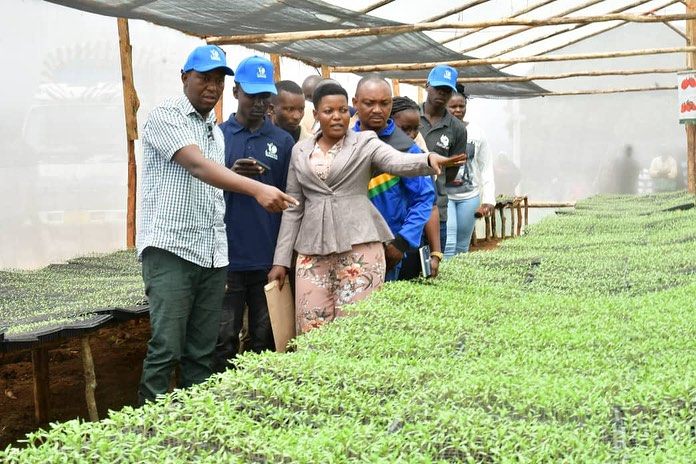
The Her Resilience, Our Planet (HROP) Project
Focus Area
The key issues or challenges the project is addressing
The Project addresses the interconnected challenges of climate change, food insecurity, environmental degradation and gender inequality affecting vulnerable communities in SAGCOT region, particularly those dependent on the GRR ecosystem. Climate change is contributing to unpredictable weather, water scarcity and declining agricultural productivity, while environmental degradation is placing additional pressure on already limited natural resources.
The project particularly recognizes that women and youth are disproportionately affected because they often have limited access to land, finance, agricultural services, markets, climate information and decision-making opportunities. These constraints reduce their ability to adapt to climate shocks and improve their livelihoods
Impact
The expected outcomes and impact of the project
To enhance the climate resilience of food insecure communities, especially women and youth, who rely on the GRR in Tanzania’s SAGCOT region. This will be achieved through three interlinked intermediate outcomes, each supported by specific immediate outcomes that are grounded in the project’s theory of change and logic model:
- i. Enhanced adoption of gender-responsive climate-smart agriculture (CSA) systems and biodiversity-protective food systems by food insecure communities, especially women and youth
- ii. Increased utilization of gender-responsive, climate-smart, and nature-positive agricultural business development resources and services
- iii. Enhanced leadership and participation of women and female youth in processes leading to gender-responsive, climate and nature-informed policies, strategies, plans, and budgets.
Together, the project partners seek to improve the wellbeing of 175,282 small-scale farmers, agripreneurs, family community, market gatekeepers and duty-bearers. This includes 60,122 small-scale farmers and 18,037 agripreneurs. Seventy (70%) of project participants will be women and female youth – who contribute about 90% of agricultural labor but remain excluded from decision-making and resource access.
Coverage
The regions, districts, or areas where the project is being implemented
The HROP project is being implemented in five districts in Tanzania’s Southern Highlands: Iringa, Kilolo, Mufindi, and Wanging’ombe (within the Ihemi Cluster), and Mbarali District (within the Mbarali Cluster). The project targeted districts lying within the Great Ruaha River (GRR) sub-basin, a critical part of the Rufiji Basin, and a lifeline for over six million people
Partners involved in the project
CARE Tanzania (lead partner), World Wide Fund for Nature (WWF-Tanzania), AGCOT Centre, Tanzania Gender Networking Programme (TGNP), Shahidi Wa Maji (SwM) and Conservation Farming Unit Tanzania (CFU-Tanzania). It is implemented in close collaboration with the Ministries, Departments and Authorities (MDAs) and the Local Government Authorities (LGAs).