

- Your cart is empty Browse Shop
Promoting nature-based solutions through spice agroforestry for landscape restoration and biodiversity conservation in three wards (Tawa, Mkuyuni and Konde) of Morogoro District.
Expected Outcomes and Impact
Spice Nurseries
Expected: Establish 9 spice nurseries across Mkuyuni, Konde, and Tawa Wards.
Achieved: 16 farmer groups identified (9 in Mkuyuni, 7 in Tawa) and trained on nursery management and Good Agronomic Practices (GAP) and now have the technical capacity to establish high-quality nurseries.
Landscape Restoration
Expected: Restore 5,000 hectares across Tawa, Mkuyuni, and Konde in the Uluguru Mountains landscape.
Achieved: 328 hectares committed for restoration, with 20,000 clove seedlings planted across the three wards, laying the physical foundation for landscape recovery.
Farmer Training
Expected: Train 2,000 spice farmers, with 40% youth and 25% women participation.
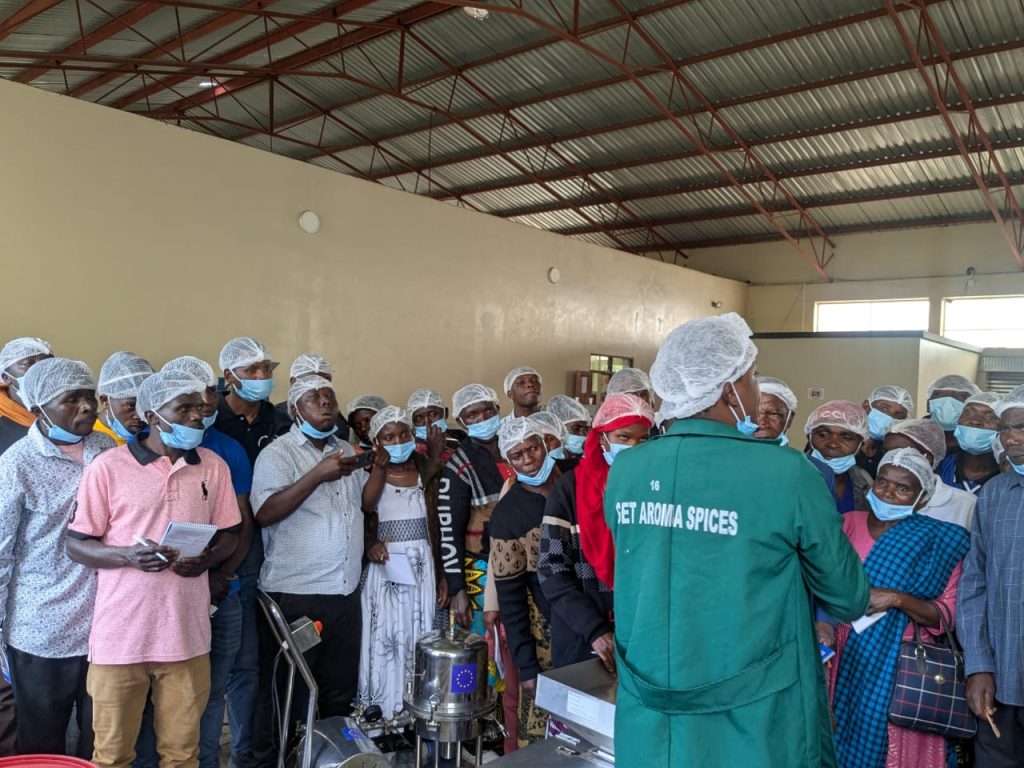
Achieved: 1,211 farmers trained, 51.5% youth, 23.7% women, across nursery establishment, agroforestry, sustainable farming practices, value addition and financial literacy. This has laid a strong foundation for farmers to scale their skills and production as crops progress through each growth stage.
Multi-Stakeholder Platforms
Expected: Establish 5 platforms for public-private engagement on spice sector growth and restoration.
Achieved: 5 platforms established one in each ward plus a high-level platform at the Regional Secretariat. These platforms now give government, private sector, and community stakeholders a standing forum to shape policy and coordinate investment in the spice value chain.
Spice Processing Facilities
Expected: Set up 3 small-scale processing factories (one per ward) for value addition and income generation.
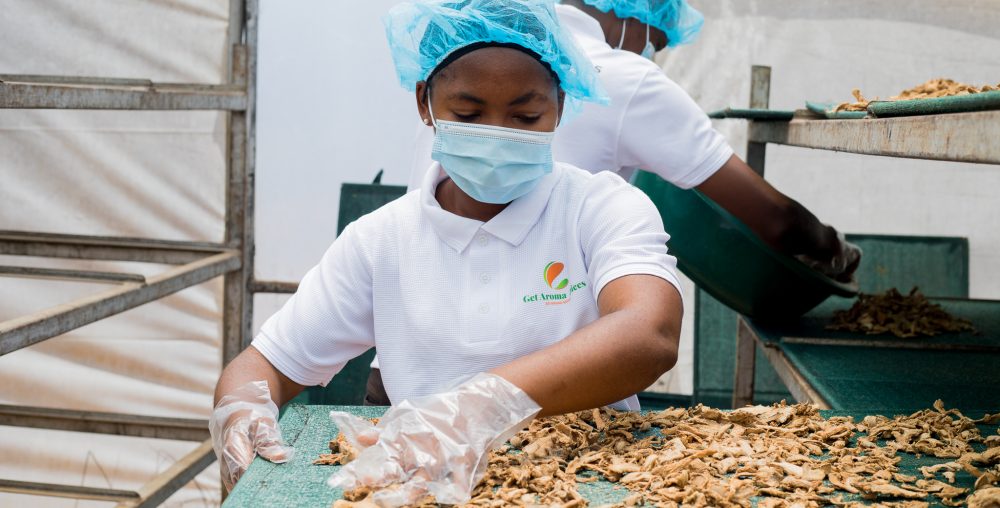
Achieved: A one-stop processing hub in Tawa Ward. Featuring a 2-ton solar dryer, an essential oil extractor (~750ml yield per batch), and a spice slicer (800kg capacity), creating 25 jobs (5 full-time, 20 part-time) and generating rental income for local government.
Land Under Climate-Smart Agriculture (CSA)
Expected: Restore 5,000 hectares across Tawa, Mkuyuni, and Konde in the Uluguru Mountains landscape.
Achieved: 328 hectares committed for restoration, with 20,000 clove seedlings planted across the three wards, laying the physical foundation for landscape recovery.
Market Linkages
Expected: Link 5,000 farmers with aggregators, traders, and transporters to expand market access.
Achieved: 1,211 farmers directly linked; over 4,000 additional farmers reached indirectly through 5 radio and TV sessions (Radio/TV Imani Morogoro, SUA TV and Radio).
Spice Agroforestry Project
Spice Agroforestry project was intended to promote nature-based solutions that improve farmer livelihoods, restore degraded landscapes, and conserve biodiversity across the spice producing wards of Tawa, Mkuyuni, and Konde in Morogoro District. By advancing spice agroforestry as a climate-resilient and economically viable alternative to unsustainable land use practices, the project addresses critical challenges related to land degradation, declining productivity, and limited livelihood opportunities for smallholder farmers.
Spice farming is increasingly recognized as a high-value agricultural enterprise with strong potential to contribute to household income, nutrition security, biodiversity conservation, and national economic growth. Morogoro District Council (DC) has favourable agro-ecological conditions for the cultivation of spices such as ginger, turmeric, cinnamon, black pepper, cardamom, cloves, and lemongrass, particularly in the hilly landscapes around the Uluguru Mountains.
Despite this potential, farmers’ participation remains low due to limited awareness, inadequate technical knowledge, and poor access to finance and markets. Unsustainable farming practices, deforestation, and overreliance on monocropping (e.g., beans and maize) have led to land degradation, soil erosion, and declining biodiversity in the district.
Spice-based agroforestry offers a viable nature-based solution. Integrating high-value spices with indigenous and multipurpose tree species enhances soil fertility, restores degraded landscapes, reduces erosion, and provides year-round soil cover while also capturing carbon. Moreover, this model improves farmers’ resilience to climate change by increasing tree cover, strengthening watershed protection, and conserving biodiversity.
Area of Focus
The project is built on three interconnected intervention themes:
- Theme 1: Promotion of Spice Agroforestry
Supporting farmers to intercrop spices with native trees, establishing demonstration plots, delivering training on agroforestry and soil conservation, and promoting peer learning through Farmer Field Schools.
- Theme 2: Biodiversity Conservation
Establishing community-led tree nurseries, promoting terracing and contour farming, reforesting degraded zones, and protecting rivers, wetlands, and watersheds through buffer zones and sustainable land-use practices.
- Theme 3: Livelihood and Market Development
Building market partnerships with spice buyers and processors, strengthening farmer cooperatives, supporting local spice processing and value addition, and improving farmers’ access to finance and financial literacy.
It has survived not only five centuries. Lorem Ipsum is simply dummy text of the new design printng and type setting Ipsum Take a look at our round up of the best shows coming soon to your telly box has been the is industrys. When an unknown printer took a galley of type and scrambled it to make a type specimen book. It has survived not only five centuries, but also the leap into electronic typesetting, remaining essentially unchanged.
Areas of Implementation
The project is implemented in Morogoro District Council, within three spice producing wards:
- 1. Mkuyuni Ward at Kibwaya, Mkuyuni, and Mfumbwe Villages,
- 2. Tawa Ward at Kitungwa, Tawa, Milawilila, and Kisarawe Villages,
- 3. Konde Ward at Kiswira village.
In total, eight priority villages across these three wards received targeted interventions.
Funding
The Spice Agroforestry Project is made possible through the generous support of the Dutch Ministry of Agriculture, Nature and Food Quality (LNV), whose funding underscores the importance of nature-based solutions for climate resilience, biodiversity conservation, and sustainable agribusiness development in Tanzania.
Partners
The project is delivered through a multi-stakeholder engagement approach, bringing together public, private, civil society, and financial sector actors:
Stakeholder Group | Role in Implementation | Stakeholder Engaged | |
|---|---|---|---|
Public sector (Government & Regulatory Agency | Policy engagement and facilitation support | Regional Government, Morogoro District Council, village and ward governments and TBS | |
Private sector entities | Core beneficiaries, Local collaborators, supply chain actors | Spice farmers (Mkuyuni, Tawa and Konde Ward), GET Aroma Spices, Trianon Spices, Horizon, BM Tropical ltd, Phalada Tanzogarnic, Twiela Company | |
CSOs/NGOs | Partners in knowledge (Concept of NbS, agroforestry and nursery establishment) | IUCN, TCRS | |
Financial Institutions | Investment support, (financial literacy and access to finance facilitation) | National Microfinance Bank (NMB) |