

- Your cart is empty Browse Shop
Project Overview
The Guiding Acid Soil Management Investments in Africa (GAIA) project is a research-for-development initiative led by International Maize and Wheat Improvement Center (CIMMYT) and supported by the Bill & Melinda Gates Foundation. The project focuses on addressing soil acidity as a major constraint to agricultural productivity, particularly among smallholder farmers in East Africa. GAIA uses soil data, agronomic research, spatial analysis and evidence-based recommendations to identify where and how investments in acid soil management, including agricultural lime application, can generate the greatest benefits for farmers, governments and the private sector.
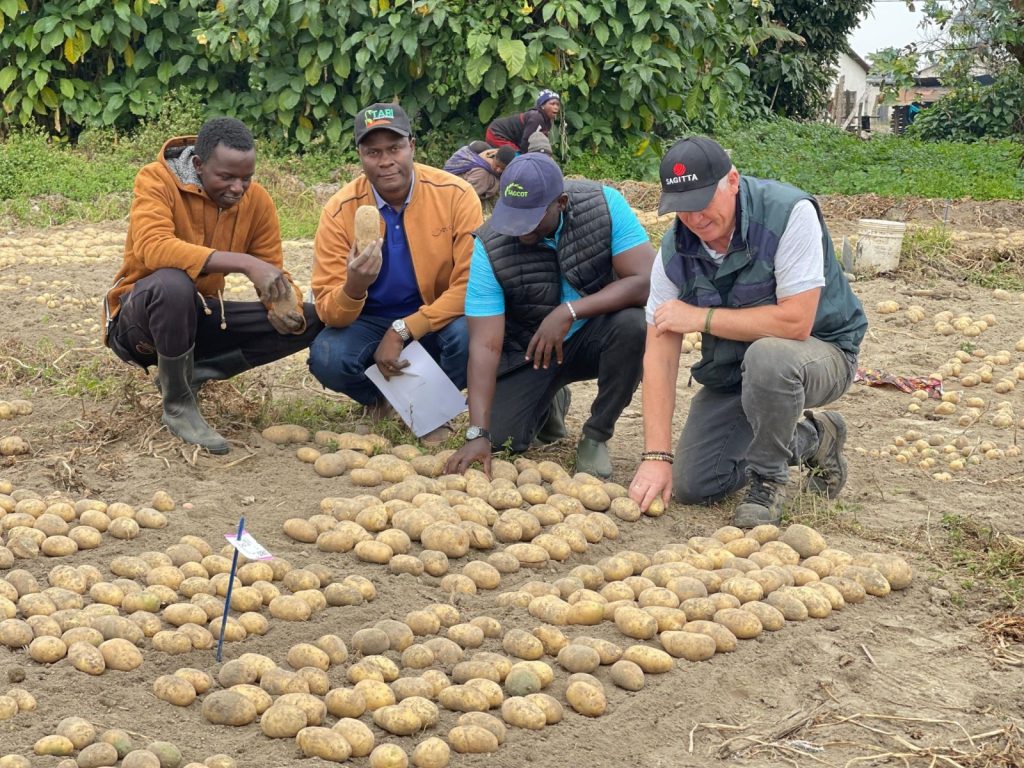
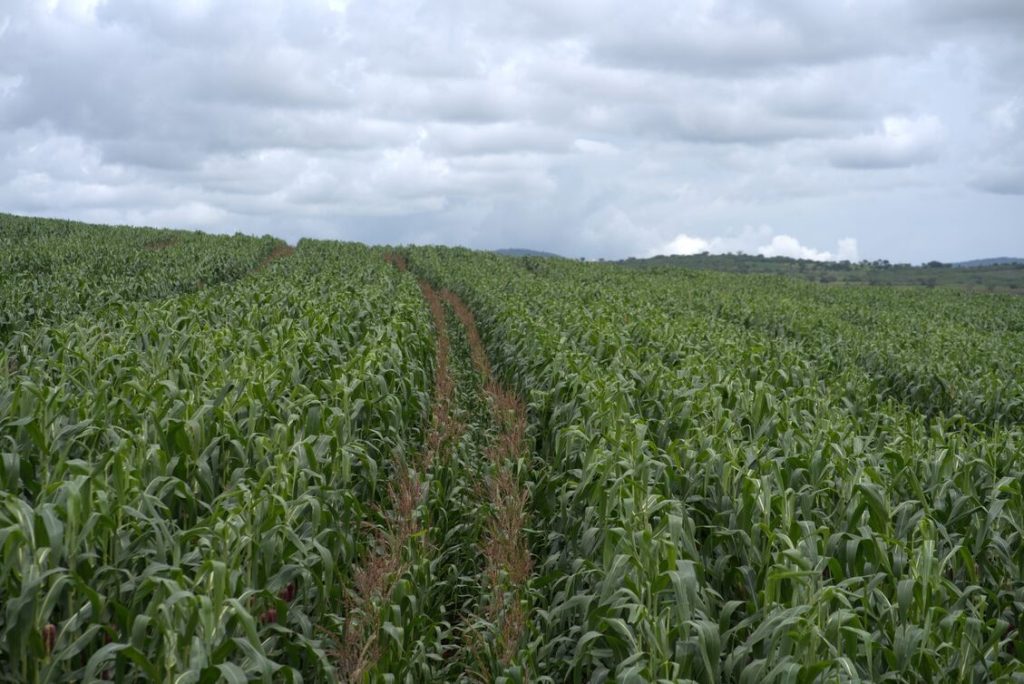
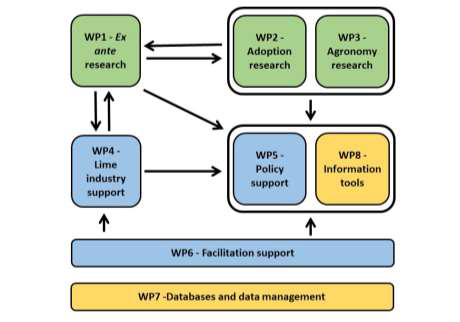
In Tanzania, GAIA worked with partners including Tanzania Agricultural Research Institute (TARI), CABI from Kenya and AGCOT Centre, formerly SAGCOT Centre. Southern Agricultural Growth Corridor of Tanzania to strengthen evidence and decision-making around soil acidity management. The project has also undertaken on-farm trials to assess crop responses to different lime application rates, including trials involving maize. GAIA is organized around eight Work Packages, each designed to deliver a specific intermediate outcome by different project partners both national and international partners i.e. TARI, SAGCOT Centre, AGRA, CABI etc.
GAIA project aims to provide the evidence, tools and partnerships needed to make soil acidity management more targeted, profitable and scalable, thereby improving soil health, crop productivity and the sustainability of smallholder farming systems. Target group includes: farmers, governments, and private sector, and the ultimate impact (rehabilitation at scale of acid soils in East Africa).
Funding
CIMMYT
Partners involved in the project
TARI, CABI, AGRA, AGCOT Centre (formerly SAGCOT Centre)
GAIA
(2020 – 2023)
Focus Area
The key issues or challenges the project is addressing
Addressing Soil Acidity i.e. rehabilitate acid soils -this is planned to be delivered through three principal outcomes i.e. data outcome, knowledge products and support to public-private partnerships (PPPs).
Coverage
The regions, districts, or areas where the project is being implemented
Geita and Songwe regions for Tanzania. It experimented lime rates that neutralized acidity in soils and hence increased maize and bean yields. However, the project was implemented in Tanzania, Kenya, Rwanda and Ethiopia.
Figure 1: Theory of Change of GAIA Project
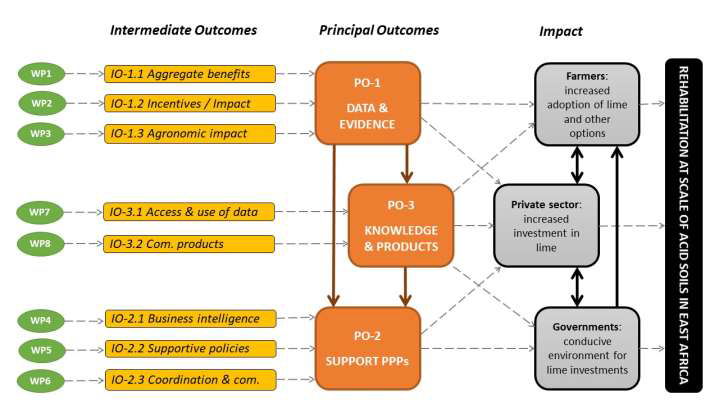
Figure 2: Articulation of the different work packages. Different colors correspond to different primary outcomes (green for Primary Outcome 1, blue for Primary Outcome 2, and orange for Primary Outcome 3). WP6 and WP7 are crosscutting.SAGCOT Centre implemented WP 4; WP5 and WP 6.
GAIA PROJECT ACHIEVEMENTS
- A. Capacity Building on Soil Acidity Management
SAGCOT Centre facilitated the Tanzania Agricultural Research Institute (TARI) to conduct intensive training on soil acidity management for agricultural extension officers in Geita and Songwe Regions. More than 70 public- and private-sector experts in each region were trained through three-day sessions covering soil acidity management practices, including practical field sessions on soil sampling procedures and techniques.
The training has contributed to the development of a network of soil acidity management champions who can support the practical dissemination and application of soil health and acidity management practices among small- and medium-scale farmers in the two pilot regions. These champions provide an additional technical resource to support TARI and contribute to the implementation of national soil health and soil acidity management strategies promoted by the Ministry of Agriculture.
- B. Assessment and Characterization of Local Agricultural Lime Sources
SAGCOT Centre commissioned TARI Uyole to conduct an Exploration and Physicochemical Characterization of Agricultural Lime Sources in the Southern Highlands of Tanzania. The overall objective was to identify local lime sources with the potential to ameliorate soil acidity and contribute to increased agricultural productivity in the Southern Highlands Zone.
The study focused on two specific objectives:
- i. To determine the physical and chemical properties of agricultural lime from ten locally identified liming material sources in the Southern Highlands of Tanzania.
- ii. To identify sources with the most effective liming properties for use in the amelioration of soil acidity in Tanzania.
The findings demonstrated significant differences in the quality of lime materials across the ten assessed sources. Songwe and Songea lime sources recorded the highest Calcium Carbonate Equivalent (CCE), at 73.19% and 53.35%, respectively, indicating that both sources provide agricultural lime of good quality.
In terms of fineness, Songea and Songwe recorded 77.53% and 75.12%, respectively, suggesting greater potential effectiveness in neutralizing soil acidity compared with other assessed sources. Similarly, the Effective Calcium Carbonate Equivalent (ECCE) results showed strong performance from Songwe (54.98%) and Songea (53.30%).
The soil pH and lime-material test results further indicated relatively low levels of heavy-metal contamination in the assessed lime sources. Overall, the findings provide important evidence for local production, quality assurance, investment, and wider utilization of agricultural lime as a soil acidity management solution.
- C. Development of the National Agricultural Lime Application Guideline
SAGCOT Centre facilitated a multi-stakeholder process involving experts from the Ministry of Agriculture, TARI, Tanzania Fertilizer Regulatory Authority (TFRA), Yara, Dodoma Cement Company, Highland Building Products, and other relevant stakeholders to develop the National Agricultural Lime Application Guideline.
The guideline provides a common technical reference for the appropriate application and use of agricultural lime and is currently pending endorsement by the Minister of Agriculture. Once endorsed, the guideline is expected to support harmonized extension messages, improve technical guidance to farmers and other value-chain actors, and contribute to increased adoption of agricultural lime.
- D. Market Performance Assessment and Investment Case for Agricultural Lime
SAGCOT Centre conducted a Market Performance Assessment of Agricultural Lime in Soil Acidity-Prone Areas of Njombe, Iringa, Geita, and Morogoro Regions to strengthen the business case for agricultural lime and identify opportunities for development of a functional lime value chain.
The assessment established that soil acidity is a widespread but under-addressed constraint to agricultural productivity in Tanzania. Available literature estimates that approximately 13–15% of Tanzania’s cropland is affected by soil acidity. Soil testing data from the assessment further indicated that significant areas of Njombe and Iringa have soil pH levels below 5.5, which can substantially reduce nutrient availability and fertilizer-use efficiency.
Despite the scale of the challenge, adoption of agricultural lime remains very low, averaging less than 10%. Many farmers are unaware of their soil pH status and the role of lime in correcting soil acidity. TARI confirmed that although technical knowledge exists at institutional level, its dissemination and practical application at farmer level remain limited.
On the supply side, the agricultural lime market remains underdeveloped despite the availability of substantial lime deposits. Key constraints include low production capacity, weak distribution networks, high transportation costs, inconsistent supply, limited storage infrastructure, and inadequate technical knowledge among agro-dealers. Transport and logistics costs can account for up to 100% of the final price of lime paid by farmers, significantly affecting affordability and last-mile access.
Nevertheless, the assessment identified a strong commercial opportunity for agricultural lime investment. With improvements in awareness, logistics, market organization, and policy support, the projected market size across the four target regions could exceed TZS 57.2 billion annually. Financial modelling for a medium-scale lime distribution and processing intervention generated a positive Net Present Value (NPV) of approximately TZS 28.6 billion over 10 years and an Internal Rate of Return (IRR) of 46%, indicating an attractive investment opportunity under an appropriate blended-financing model.
At farm level, increased adoption of lime has the potential to improve crop yields by approximately 25–60%, depending on baseline soil conditions and crop type. This could contribute to increased farm incomes, improved food security, enhanced climate resilience, and more efficient use of fertilizers.
The farm-level economic analysis demonstrated particularly strong returns for common beans and maize. Under conservative yield assumptions and a 10-year projection:
- i. Common beans: Lime application generated an estimated NPV of approximately TZS 2.42 million per hectare.
- ii. Maize: Although returns were comparatively modest, lime application generated a positive NPV of approximately TZS 86,649 per hectare, indicating that liming remains a worthwhile long-term soil health investment even for lower-income maize farmers.
The assessment also identified wider system-level opportunities, including employment creation through agro-dealer networks, transportation services, lime processing facilities, storage hubs, and other value-chain enterprises.
Key recommendations emerging from the assessment include:
- i. Introduce lime-specific subsidies and fiscal incentives, including consideration of VAT and the 4% royalty charge on agricultural lime, and integrate lime into national soil fertility and agricultural input-support programmes.
- ii. Provide financial incentives, technical training, and access to soil data for agro-dealers and logistics providers willing to invest in the agricultural lime business.
- iii. Establish partnerships among lime manufacturers, TARI, NGOs, cooperatives, and other stakeholders to strengthen distribution, farmer awareness, and localized demonstrations.
- iv. Invest in regional lime storage and distribution hubs, particularly in Njombe and Iringa, to reduce logistical constraints and demonstrate scalable business models.
- v. Establish a multi-stakeholder platform led by SAGCOT to coordinate implementation, track progress, promote innovation, and align government, development-partner, and private-sector investments in the agricultural lime value chain.
- E. Documentation of Soil Acidity Management Success Stories
SAGCOT Centre facilitated the documentation of success stories from the Geita soil acidity trials conducted by TARI. The documentation captured practical experiences and results from the trials and has been developed into a video to support wider learning, communication, and dissemination of evidence on soil acidity management.
Watch a video
- F. Dissemination of Soil Analysis Results and Farmer Awareness
SAGCOT Centre facilitated the dissemination of soil analysis results from the Geita soil acidity trials to increase farmers’ understanding of soil health, soil testing, and the importance of agricultural lime in improving soil conditions and productivity.
A total of 523 farmers were reached, comprising 342 males and 181 females, including 120 youth. Farmers were equipped with knowledge on various Climate-Smart Agriculture (CSA) practices, including appropriate use of agricultural lime as a soil acidity management intervention.
- G. Development of Policy Briefs on Soil Acidity and Agricultural Lime Investment
SAGCOT Centre facilitated the development of two policy briefs through a multi-stakeholder task force comprising representatives from the Ministry of Agriculture, Ministry of Minerals, Ministry of Industry and Trade, Tanzania Fertilizer Regulatory Authority (TFRA), Highland Building Products, and Mtewele General Traders.
The policy briefs are intended to stimulate policy dialogue, increase awareness of the scale and implications of soil acidity, strengthen demand for agricultural lime, and ultimately create a more enabling environment for agricultural lime investment in Tanzania.
The two policy briefs are:
- i. Soil Acidity in Tanzania: A Cause of Low Crop Productivity and Food Insecurity
- ii. Soil Acidity Challenge and Associated Opportunities for Agricultural Lime Investment in Tanzania
- H. Increased Awareness, Policy Alignment, and Enabling Environment for Soil Health
The GAIA Project through the SAGCOT Soil Health Partnership has contributed significantly to raising awareness of the importance of soil health and sustainable soil management. This increased awareness has contributed to soil health gaining greater visibility within the national agricultural agenda, including its incorporation into the Ministry of Agriculture’s Agenda 10/30.
Through the Policy Analysis Group (PAG), SAGCOT Centre engaged the Ministry of Agriculture on measures to improve access to soil testing technologies. This engagement contributed to the exemption of VAT on selected soil-testing equipment, including the Chameleon sensor reader, wetting front detectors, electronic conductivity meters, and nitrate test strips. The measure is expected to reduce the cost burden on end users, including smallholder farmers, and facilitate wider access to soil testing.
SAGCOT Centre, through the GAIA Project, also facilitated dialogue among Government ministries, regulators, and agricultural lime industry operators, resulting in stronger alignment on the policy, regulatory, and cost-related constraints affecting the growth of the agricultural lime industry.
These engagements have helped to clarify some of the key factors contributing to the limited availability and affordability of agricultural lime at the last mile. Going forward, continued collaboration among Government, private-sector actors, development partners, research institutions, and farmer organizations will be critical to translating this alignment into practical investments that increase the accessibility and utilization of agricultural lime.
Overall, the GAIA Project has contributed to strengthening the evidence base, technical capacity, policy environment, market development, and farmer awareness required to address soil acidity in Tanzania. These interventions provide a foundation for scaling soil health solutions and unlocking private-sector investment in agricultural lime, with the potential to improve productivity, farmer incomes, food security, and climate resilience.